Overwatch team composition: how to build a balanced 5v5
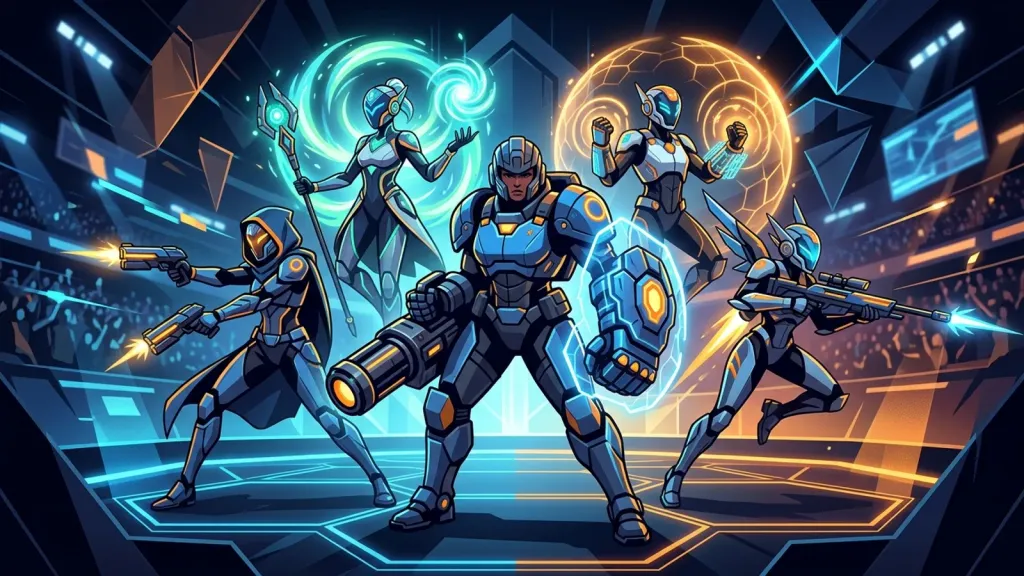
In Overwatch 2, a valid five-player team only works with one fixed composition: 1 tank, 2 damage, 2 support. The game itself enforces this through role queue — you can’t queue with three tanks or zero healers. That makes Overwatch the clearest example of mandatory composition among hero shooters, and it’s also where most groups get it wrong: they stack five friends by individual skill and forget that a role gap decides the match before the first fight even starts.
The role lock: 1 tank, 2 damage, 2 support
Since the switch to 5v5 in October 2022, Overwatch 2 cut the tank slot from two players down to one, while keeping two damage and two support. That applies both in ranked and quick play role queue, the standard match format, and in any organized 5v5 among friends that wants to mirror the real game — try to run two tanks and you’re short a slot somewhere else, and the composition is broken before it starts.
That ratio isn’t bureaucracy. The solo tank now has to hold space and absorb damage that used to be split with a second tank, so the choice of who plays that role carries more weight than any other slot on the team.
It’s the same 1-2-2 lock you see in top-level tournaments, like the Overwatch World Cup, a national-team competition that runs dozens of squads through the year — what changes between a group of friends and a pro national team isn’t the structure of the composition, it’s the level of execution inside it.
What each role actually does inside the composition
Tank: the one who creates and holds space
The tank goes in first, holds the front line, and clears the path for the rest of the group to push the objective. Reinhardt, Winston, Orisa, D.Va, Roadhog, and Ramattra are common examples. Since there’s only one tank slot in 5v5, that hero pick already defines a lot of the team’s style: a Reinhardt pulls toward brawl, a Winston or D.Va pulls toward dive.
Damage: the one who closes out the scoreboard
The damage role splits into two styles that rarely overlap in the same person: hitscan, which lands the instant you aim (Soldier: 76, Cassidy, Ashe, Widowmaker), and projectile or mobility, damage that depends on positioning and movement (Genji, Tracer, Pharah, Junkrat). A team with two long-range hitscans plays very differently from a team with one mobile flanker and one sniper — and this is where most friend groups improvise without realizing they’ve already committed to a style.
Support: the one who keeps the team alive and creates the edge
The two supports usually split between main healing (Mercy, Moira, Baptiste, Ana), which sustains the team through direct fights, and utility support (Lucio, Zenyatta, Kiriko), which mixes lighter healing with an effect that swings the fight — speed, damage amplification, immunity. Two main healers leave the team without the utility that turns a losing numbers fight around; two utility supports leave the team without the sustain to hold a long engagement.
The three composition archetypes
Combining the five picks builds a recognizable playstyle. The three most common:
| Archetype | How it plays | Typical heroes |
|---|---|---|
| Dive | Uses mobility to isolate and eliminate a specific target before the rest of the team can react | Winston, D.Va, Genji, Tracer |
| Poke | Pressures from range, avoids close combat, and forces the opponent’s positioning to break | Orisa, Sigma, Widowmaker, Hanzo, Ana |
| Brawl | Goes straight at the point and wins through raw sustain and area control | Reinhardt, Junker Queen, Roadhog, Mei, Reaper |
No archetype is objectively better — each responds best to a different map and a different group’s playstyle. The common mistake is mixing pieces from two archetypes (a brawl tank with two poke damage picks, for example), which leaves the composition without identity or synergy between abilities.
How to build your group’s 5v5, step by step
- Lock the tank slot first. It’s the decision that defines the whole team’s style the most, and the one friend groups avoid the most — settle it before splitting the rest.
- Guarantee at least one main healer. Without it, the team can’t sustain a direct fight, no matter how much damage the rest of the roster puts out.
- Pair the two damage picks by style, not just by preference. A hitscan and a mobile flanker cover more situations than two hitscans camping the same angle.
- Pick the archetype before the heroes. Decide whether the team plays dive, poke, or brawl, then choose heroes inside that style — a strong hero outside the chosen archetype hurts more than it helps.
- Rotate roles between matches, not mid-map. Swapping tanks in the middle of a scrim breaks the map control the team already built.
If your group is bigger than five and all that’s left is splitting who plays on which team, Squadb’s team randomizer handles that split automatically — from there it’s just a matter of fitting roles inside each 5v5 with the steps above. The same principle of locking a role before building the roster shows up outside Overwatch too: the Valorant team composition guide covers how it applies to a tactical shooter without a mandatory role lock.
Common mistakes that break the composition
- Two main healers, zero utility. The team survives the fight but never gets the edge that decides the round.
- Picking the tank last. It’s the role friend groups are shortest on, precisely because it’s the most exposed — leaving it to whoever’s left over is a bad way to fill it.
- Mixing archetypes without noticing. A Reinhardt (brawl) paired with a Widowmaker (poke) forces both of them to fight outside their ideal range.
- Swapping heroes every lost round. Losing the synced healing or the space control the team already built costs more than the variety is worth.
Frequently asked questions
Can you play without following the role lock? In casual play without role queue, yes, but the team loses the foundation that makes the game work — without enough tank, the whole group is exposed; without both supports, nobody can hold a long fight.
Which role is easiest for someone starting out in Overwatch? Utility support, like Lucio or Moira, is usually the smoothest entry point: the movement and aim requirements are lower, and the team impact shows up even before the player’s aim is sharp.
Do you need to lock the archetype before picking heroes? It’s not mandatory, but it avoids the most common problem: putting together individually strong picks that don’t work together inside the same 5v5.