Dota 2 Positions: What Carry, Mid, Offlane, Support 4 and Support 5 Do
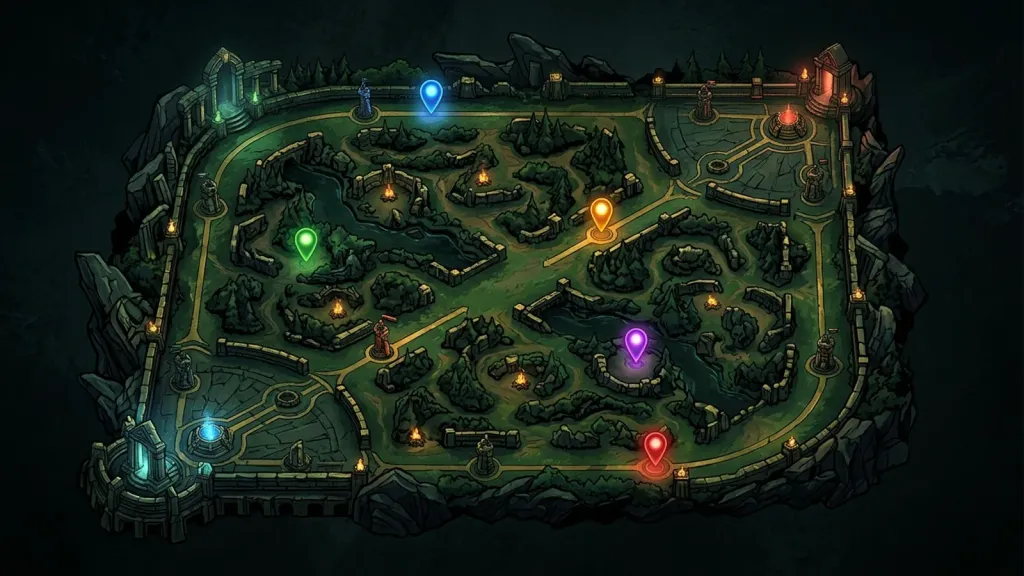
In Dota 2, the five positions on a team don’t have fixed names — they have numbers. Position 1 is the carry, position 2 is the mid, position 3 is the offlaner, position 4 is the soft support, and position 5 is the hard support. The number isn’t arbitrary: it follows the priority for gold and experience within the team, from the player who needs to farm the most down to the one who farms the least and spends most of the match taking care of the other four.
Why the position has a number, not just a name
In other MOBAs, positions are usually named after the lane — top, jungle, support. In Dota 2, the 1-to-5 numbering describes an economic priority: who gets the creep kill when two heroes contest the same minion, who keeps the expensive item when team gold is tight, whose farm the team sacrifices first if the game goes badly. In theory, any hero can fill any position — but in practice each one has traits that fit a role best: scales late and needs items (carry), strong early and levels up fast alone (mid), tanks damage and starts fights (offlaner), or brings control and mobility without needing much gold (supports).
How the five spread across the map
The standard setup follows a 2-1-2 layout:
- Safe lane: position 1 (carry) and position 5 (hard support), playing 2 vs 2 or 2 vs 1
- Mid lane: position 2 (mid), alone, 1 vs 1
- Offlane: position 3 (offlaner) and position 4 (soft support), on the side of the map where farming safely is harder
“Safe” and “hard” describe the risk of getting exposed to ganks and the enemy tower, not lane size — one team’s safe lane is the opponent’s hard lane, because it sits close to your own base on one side and close to the enemy base on the other.
Position 1: the carry
The carry gets the team’s highest farm priority. Early on, it’s the weakest hero in a direct fight — farming minions alone in the safe lane, avoiding big fights, and relying on the support to not get pushed off the lane. It’s a deliberate trade-off: little impact now for a lot of impact later. With the right items, the carry becomes the team’s biggest damage source in mid-to-late-game fights, and the whole match revolves around protecting them until that point arrives. Losing the carry in a decisive fight usually costs the game; losing any other position tends to hurt less.
Position 2: the mid
The mid plays alone in the middle lane, the shortest one on the map, against a single opponent. It’s the position with the highest level in the first few minutes — whoever wins the lane duel reaches level 6, with their ultimate available, well before the rest of the map does. It’s also the position that contests power runes the most, since the mid lane sits equally close to both spawn points along the river. A well-played mid uses that level lead to leave their own lane and help top or offlane with a gank, forcing the opponent to play a man down somewhere else on the map — the same roaming principle found in other MOBAs, except here it’s usually decided by whoever comes out ahead in the 1v1 duel.
Position 3: the offlaner
The offlaner plays the hard lane, against two opponents (the enemy carry and hard support), starting the match at a numbers disadvantage. Their job there isn’t to farm comfortably — it’s to survive, disrupt the enemy carry, and deny lane experience whenever possible even while outnumbered. That’s why the position usually goes to durable heroes who can tank damage and have some way to escape ambushes. By mid-game, the offlaner becomes the one initiating team fights or holding the front line while the rest of the team deals damage from behind — the job changes, but the logic stays the same: create space so positions 1 and 2 can farm and shine later.
Position 4: the soft support
Position 4 shares the hard lane with the offlaner, but with more freedom to roam the map than position 5. It farms less than the top three positions, but more than position 5 — hence “soft support,” a support that still gets some resource priority. The typical job is rotating between lanes to set up ganks, securing vision where the team needs it most, and showing up whenever a control play can turn a fight. It’s the position most associated with creating early opportunities — while position 5 sustains the carry, position 4 goes looking for fights in the team’s favor.
Position 5: the hard support
Position 5 has the team’s lowest farm priority, by design. Gold from the safe lane goes almost entirely to the carry; the hard support spends the match handling vision — placing wards at the points that reveal enemy movement —, protecting the carry from enemy dives on the lane, and later, saving teammates in fights with their own abilities. It’s the position most decisive for players who understand the game and the easiest to underrate just by looking at the kill count, because most of the work it does never shows up there.
The five positions, side by side
| Position | Name | Lane | Farm priority | Main focus |
|---|---|---|---|---|
| 1 | Carry | Safe (with pos. 5) | Highest | Becoming the biggest damage source late-game |
| 2 | Mid | Middle, alone | High | Level lead and support for other lanes |
| 3 | Offlaner | Hard (with pos. 4) | Medium | Surviving outnumbered and creating space for the team |
| 4 | Soft support | Hard (with pos. 3), mobile | Low | Rotations, vision and early control plays |
| 5 | Hard support | Safe (with pos. 1) | Lowest | Protecting the carry and sustaining the team with vision |
How to build a five-player team without arguing
- Settle carry and mid first if someone already has a clear preference. They’re the most contested positions in any group, since they concentrate farm and fight impact.
- Don’t leave the two support positions as an afterthought. Position 4 and position 5 require different reads — the 4 needs map awareness to rotate, the 5 needs the patience to farm little the entire match without getting frustrated.
- Put your group’s most experienced player in the offlane, if you have one. It’s the position that suffers most in the first few minutes, facing two opponents, and mistakes there affect the whole match’s tempo.
- Rotate positions between matches, not during the same match. Switching roles mid-session disrupts each player’s read on their own lane.
- If your group is bigger than five and you still need to decide who plays on which team, Squadb’s team randomizer sorts that out in seconds — then just apply the steps above inside each five-player team.
Frequently asked questions
Can a hero only play one position? No. Most heroes are designed for a specific position, but many work in more than one depending on the team’s composition — a control hero can be position 4 on one team and position 5 on another.
Why is position 3 called offlaner instead of “hard position”? “Offlane” is the name of the lane itself (the lane away from your own base’s safety), and the term ended up naming the position that plays there too — similar to how “mid” names both the lane and the player.
Can support 4 and support 5 swap roles mid-game? In practice, advanced teams adjust who rotates more and who stays near the carry as the match evolves, but the farm split between the two usually holds — changing it without a good reason takes resources away from whoever needs them most.
If your group also plays other MOBAs, the same logic of one fixed role per player shows up in League of Legends, even though the position names are different.